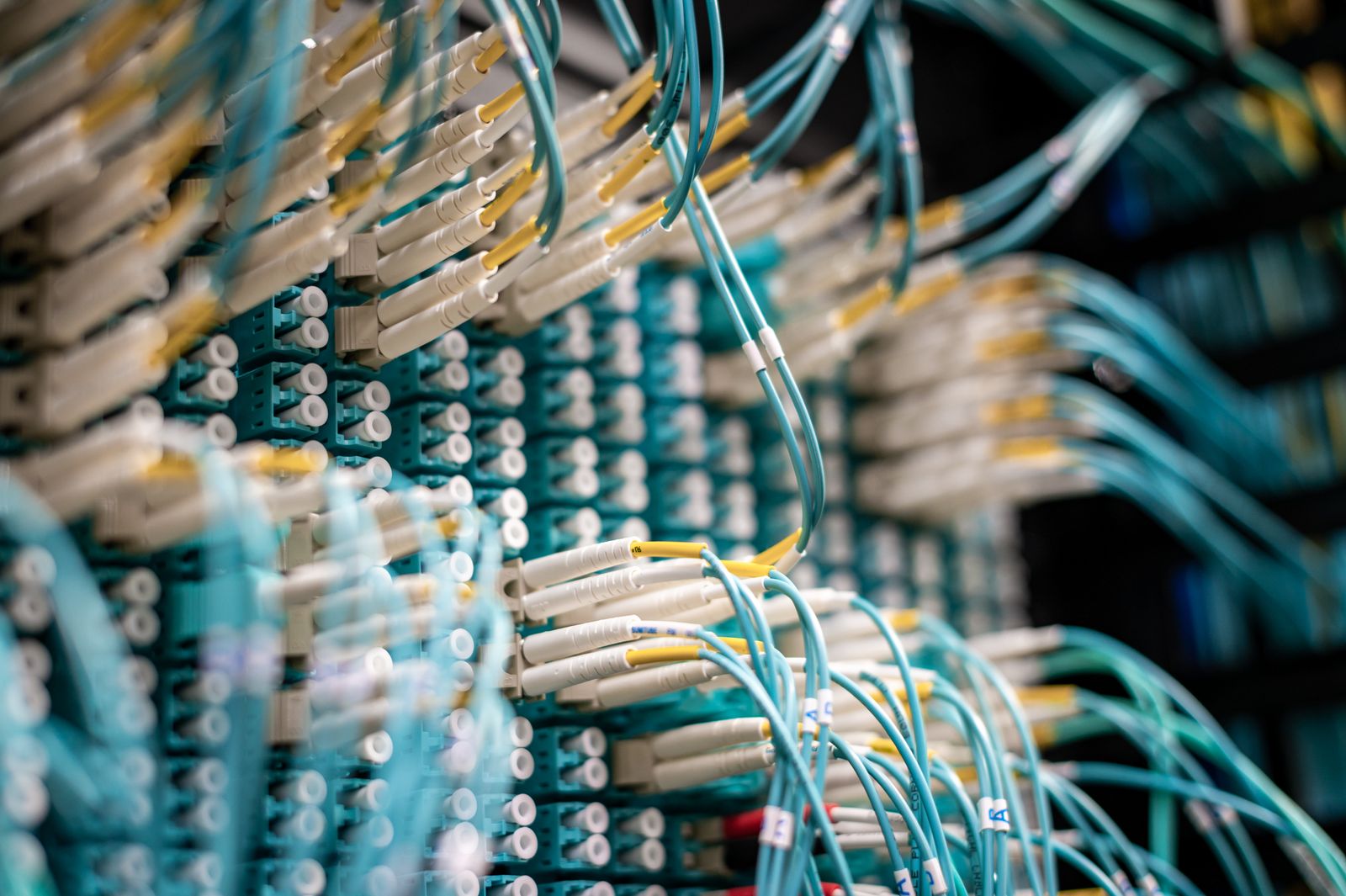
One Carrier Is a Single Point of Failure
Every network goes down eventually — fiber gets cut, routers fail, maintenance windows collide with your busiest hour. If all of your traffic rides one carrier, their bad day becomes yours. Carrier diversity means no single provider, path or building entrance can take you offline.
The good news: inside a carrier-dense building like Lumenrack, diversity is an ordering exercise, not a construction project.
Rule 1: Two Carriers, Two Paths
Start with two providers whose networks do not share fiber along your critical routes. Ask for route maps, not assurances. Diverse long-haul paths out of Omaha — one heading east, one west, or providers on different rights-of-way — survive the backhoe scenarios that shared conduit cannot.
Rule 2: Separate the Entrances
Two carriers entering through the same vault is redundancy theater. Our campus offers multiple fiber entrances and risers; we land primary and backup circuits on physically separate infrastructure and document the separation for your audits.
Rule 3: Peer as Your Third Path
Heartland IX peering acts as a free backup lane for much of your traffic. When a transit session flaps, peered routes to content and eyeball networks keep users unaffected while the primary recovers. See our Peering page for port options.
Rule 4: Test the Failover
Untested redundancy fails exactly when needed. Schedule maintenance-window tests twice a year: pull the primary, watch traffic shift, measure convergence time, then restore. Our engineers will supervise and record results.
Your Next Step
Bring us your current topology and we will map a diverse design with carrier options from the 60+ networks on site — usually within one business day.